


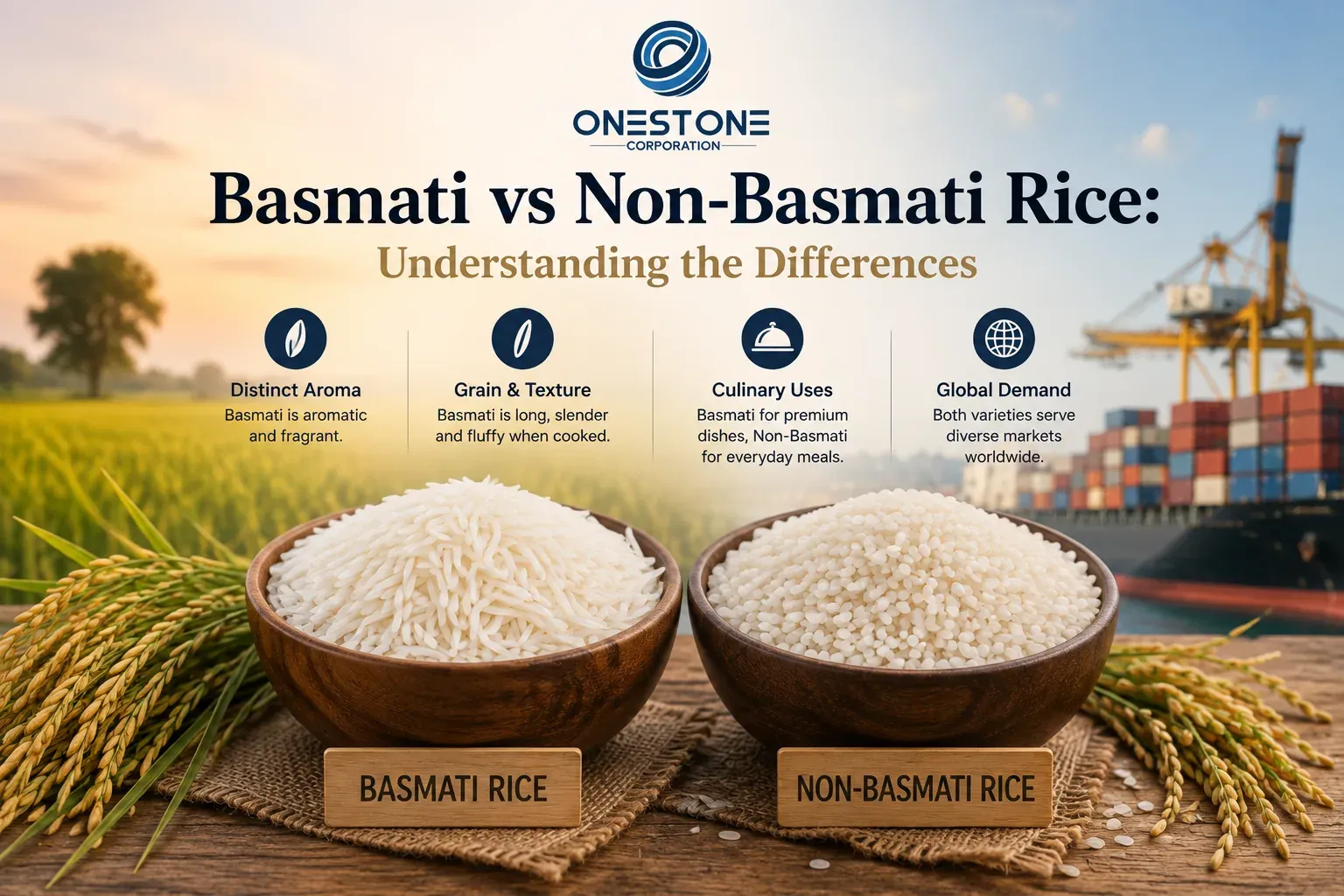
India is one of the world's leading rice-producing and exporting countries, supplying both basmati and non-basmati rice to markets around the world. While both varieties play an important role in global food trade, they differ significantly in aroma, grain characteristics, culinary applications, and market preferences.
Basmati rice is widely recognized for its long, slender grains, distinctive aroma, and excellent elongation after cooking. It is particularly popular across the Middle East, North America, Europe, and other international markets where premium aromatic rice is preferred.
Non-basmati rice includes a broad range of varieties with different grain sizes, textures, and cooking characteristics. These varieties are widely consumed as everyday staples and serve diverse requirements across global markets.
Selecting the right rice depends on the buyer's required specifications, intended application, grain characteristics, packaging requirements, and target market.
At Onestone Corporation, we focus on supplying quality Indian agricultural products through a dependable sourcing and export network. Careful product selection, quality inspection, appropriate packaging, and export documentation help us maintain consistency throughout the supply process.
India's diverse rice production capabilities allow international buyers to source varieties suited to different consumer preferences and market requirements.