


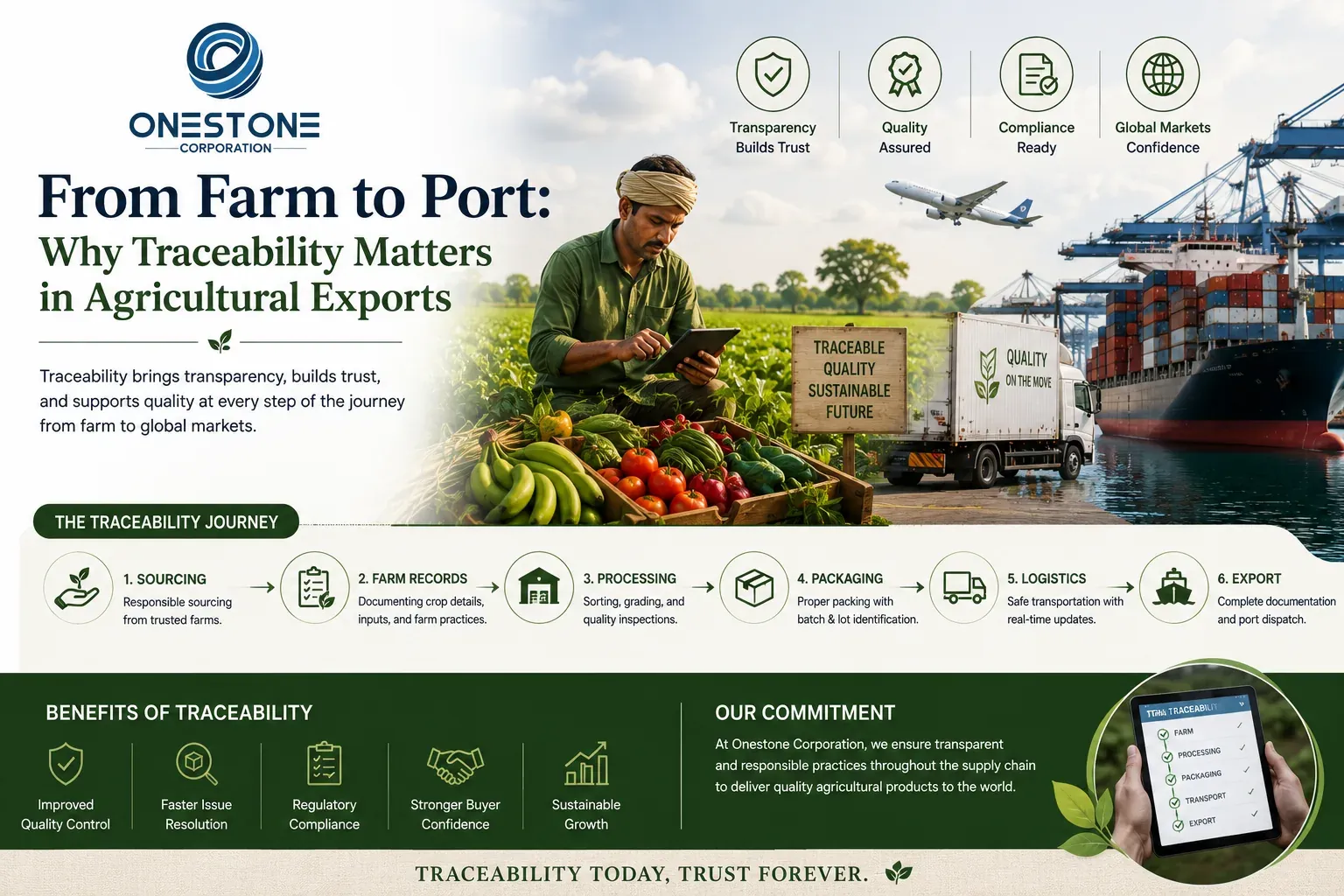
Global agricultural trade is evolving. International buyers increasingly expect more than competitive pricing and consistent product quality—they also want greater transparency about where products originate, how they are handled, and how they move through the supply chain.
This is where traceability becomes important.
Agricultural traceability involves maintaining relevant information about a product throughout different stages of its journey, from sourcing and processing to packaging, documentation, logistics, and final shipment.
For exporters and suppliers, better traceability can support stronger quality control. If product batches, suppliers, processing activities, and shipment information are properly maintained, businesses can identify and address potential issues more efficiently.
Traceability also works alongside food-safety and regulatory compliance. As international markets strengthen their standards, accurate records and transparent supply chains can help businesses demonstrate that applicable sourcing, processing, packaging, and documentation requirements have been considered.
For international buyers, this additional visibility can contribute to greater confidence in their supply partners.
At Onestone Corporation, we believe a dependable agricultural supply chain should be built around quality, transparency, responsible sourcing, and reliable export coordination. From product sourcing and inspection to packaging and documentation, each stage contributes to delivering products that meet customer expectations.
As technology continues to transform global food supply chains, traceability is likely to become an increasingly important part of building resilient and trusted agricultural trade relationships. Current industry developments are already putting greater emphasis on digital traceability and supplier-level transparency.