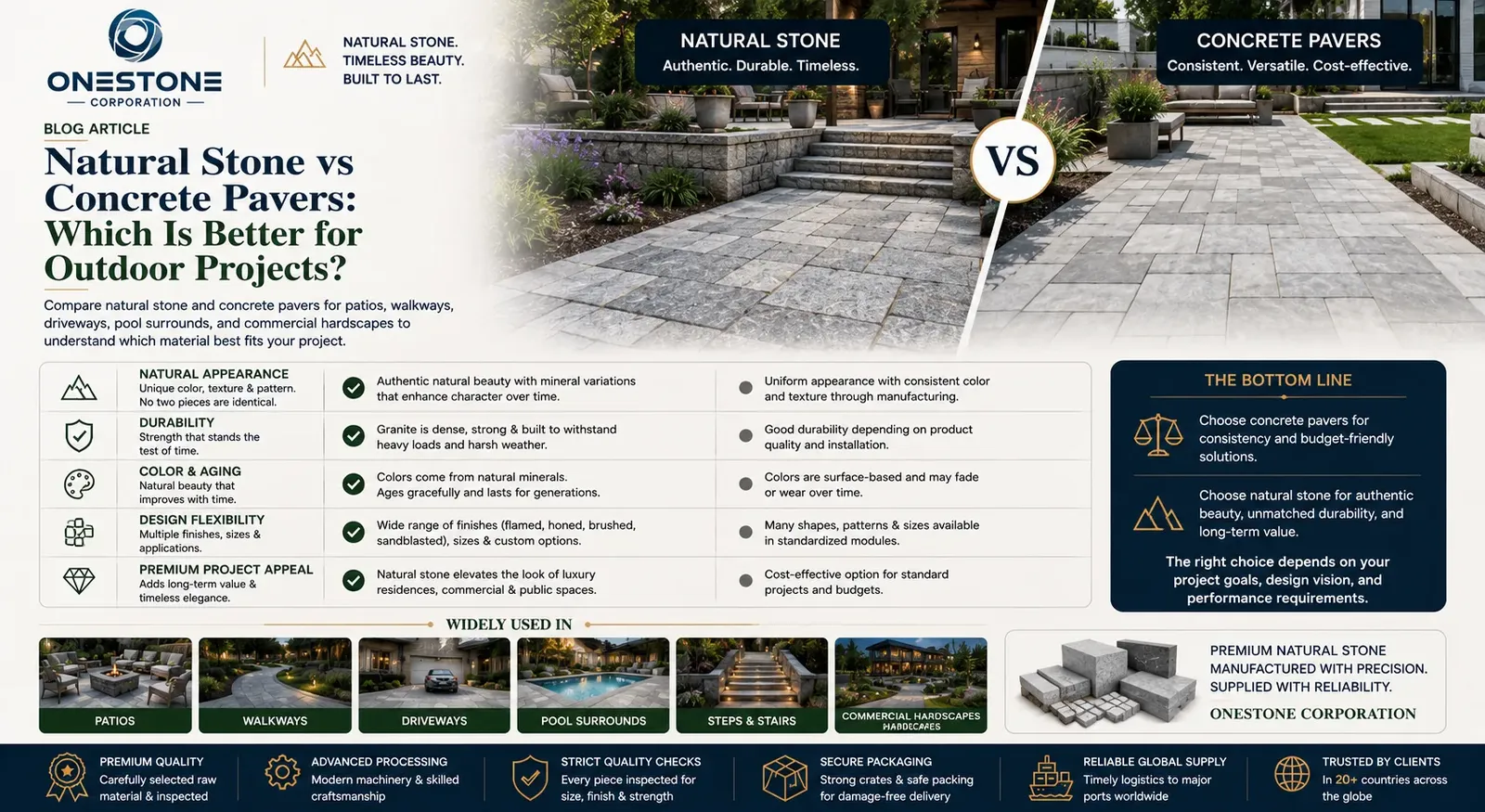
Choosing the right paving material is one of the most important decisions in an outdoor project. Two common options are natural stone and manufactured concrete pavers, each offering different advantages in appearance, performance, installation, and cost.
For homeowners, landscape architects, contractors, builders, and hardscape professionals, understanding these differences can help determine which material is better suited to a particular project.
1. Natural Appearance
Natural stone is formed over millions of years, giving every piece its own variation in color, mineral composition, texture, and pattern.
Granite pavers can therefore create outdoor spaces with an authentic character that manufactured materials attempt to reproduce.
Concrete pavers, on the other hand, are manufactured using molds and controlled mixtures. They can provide greater uniformity in shape and appearance, which may be desirable for certain designs.
2. Durability
Granite is naturally dense and strong, making it suitable for demanding exterior applications when the appropriate stone thickness, finish, installation method, and specification are selected.
It can be used for patios, walkways, plazas, steps, driveways, pathways, and commercial hardscapes.
Quality concrete pavers can also provide good performance, although their characteristics depend considerably on manufacturing quality and product specifications.
3. Color and Aging
One of natural stone's distinguishing characteristics is that its color comes from the minerals within the stone itself.
As natural stone ages, weathering can contribute to its character rather than simply making every installation look identical over time.
Concrete pavers receive their appearance through manufactured materials and pigments, and their long-term appearance can vary according to product quality, exposure, maintenance, and environmental conditions.
4. Design Flexibility
Granite can be manufactured in different sizes, thicknesses, edge treatments, colors, patterns, and surface finishes.
Flamed, sandblasted, brushed, honed, and natural finishes give landscape designers considerable flexibility when creating outdoor spaces.
Concrete pavers also offer numerous manufactured shapes and patterns, making them particularly useful where highly standardized modular designs are required.
5. Premium Project Appeal
For projects where authentic materials and architectural character are priorities, natural stone can create a distinctly premium appearance.
This is one reason granite is frequently considered for luxury residences, landscape architecture, hospitality developments, commercial properties, public spaces, and premium outdoor living areas.
So, Which Should You Choose?
There is no universal answer.
Concrete pavers can be appropriate where standardized dimensions, particular manufactured patterns, or budget considerations are the primary priorities.
However, when a project prioritizes natural character, long-term durability, premium appearance, and distinctive material variation, granite and other natural stones offer compelling advantages.
At Onestone Corporation, we manufacture and supply premium natural stone for landscaping, hardscape, masonry, and architectural projects, including pavers, steps, treads, curbing, wall stone, coping, and custom-cut products.
The right outdoor material should not simply look good when installed—it should complement the architecture, perform according to the project's requirements, and contribute to a space designed to last.